5 Odd Things in Norse Mythology

A painting by Norwegian artist Peter Nicolai Arbo

Norse mythology makes for some great reading but every now and then you can run across something that makes you scratch your head for a minute. This week I’ll be sharing some of the odder things I ran across.

Heimdal’s teeth
According to the Eddas “He also bears the appellation of the Gold-toothed, on account of his teeth being of pure gold…” I can understand his super hearing and extraordinary sight (Heimdal can hear the grass grow and can see for a hundred miles, day or night.) Those senses help Heimdal fulfill his role as the guardian of the rainbow bridge. I’m not as clear on the purpose of the golden teeth.

Ratatoskr
The Norse sagas are filled with mentions of all kinds of mighty creatures. There is the Fenris Wolf, there is the Midgard Serpent, and there is Ratatoskr, the Squirrel? Yes, a squirrel. Now, granted, he isn’t a creature of might and doesn’t serve the role of a monster. Ratatoskr’s sole purpose is to run up and down Yggdrasil the World Tree. He does this so he can serve as a messenger between the unnamed eagle who lives at the top and Nidhoggr, the wyrm who is chained at the bottom of the tree. If a squirrel carrying messages isn’t odd enough, the messages are said to consist of “slanderous gossip.”

Mimir’s Head
The problem with Mimir’s head is that it isn’t attached to his body. After the war between the Aesir and the Vanir gods was over, hostages were exchanged. Mimir was one of them. The Vanir were angry at the other hostage but instead of hurting him they cut off Mimir’s head and sent it to Odin as a sign of their displeasure. Odin preserved the head using herbs and set it up as the guardian of the Well of Knowledge.

The Four Corners of the World
Greek mythology gives us the myth of Atlas, a Titan who bore the weight of the sky on his mighty shoulders. The only other person who could master that task was Heracles, the mighty son of Zeus. So it required some serious strength to hold up the sky. Who did the Norse myths assign to this serious task? Was it Magni, son of Thor whose name actually means “strong?” No, in Norse myths the sky is held up by four Dwarves. Norðri, Suðri, Austri and Vestri serve in this important role. Their names mean North, South, East and West. It is a rare instance of the Dwarves getting a mention outside of their role as master craftsmen.

Ragnarok
The name of this event has been interpreted to mean either Fate of the Gods or Twilight of the Gods. It is often compared to the Christian vision of the Apocalypse but there is a big difference in that Ragnarok is not the end of everything. It is a time when brothers will fight and it is referred to as “an axe-age, a sword-age.” But after Ragnarok is done and the battles are over, a new golden age dawns upon the face of the earth. So it is about total warfare and the end of the world. But Ragnarok is also about the birth of a new and better time.

I hope you’re enjoying this series on Norse mythology. If there’s any subject you’d like to hear about, let me know and I’ll see what I can do. You can also check out the other entries in this series.

Five Foods of the Gods

Five Cool Creatures From Norse Mythology

Five Ways Dwarves Get No Respect

Five Magical Weapons from Norse Mythology

Loki’s Five Biggest Tricks

Five Foods of the Gods

Idun and Loki

The Norse heaven of Valhalla is a place for feasting. But what would you expect to have if you go there?

Boar meat
If you’re in Valhalla, I hope you like pork.  Every night the cook Andhrímnir slaughters and serves up the boar
Sæhrímnir. He feeds the meat to the assembled Aesir gods and goddesses and to all of the Einherjar, those warriors whose bravery has earned them a place in heaven. Every morning the boar comes back to life and is served up all over again at that night’s dinner. There is a bit of confusion as to whether or not Sæhrímnir is a boar. Although the sagas mention him as a boar, his name translates more along the lines of “sooty sea-beast.” So this is a bit unclear. It is also unclear how Sæhrímnir feels about being the main course every single night.

Mead
The Norse love their mead (fermented honey for those of you who don’t know.) and you certainly need something to wash down all of that boar meat. Luckily for the Einherjar they have an unlimited source of mead – it comes from a goat. Yes, a goat. For whatever reason, the gods created a magical goat that produces mead instead of milk. This is just one goat that we’re talking about here and it supplies enough mead that all of the hundreds of warriors in Valhalla are able to drink their fill every night. That is one magical goat.

Mead of Poetry
You say you don’t want mead that comes from a goat? There is other mead available in Asgard – the Mead of Poetry. This particular stuff turns anyone who drinks it into a poet or a scholar. Pretty good, right? Except it is made from the blood of a man named Kvasir. At the end of the war between the Aesir and Vanir, they created a man named Kvasir as a symbol of the truce between the two groups of gods. He was a wise man, so wise that he could answer any question. One day he was visiting a couple of Dwarves. For reasons unclear to me the Dwarves killed him and used his blood to make some mead. The mead was taken from the Dwarves by a giant (The Dwarves were a pretty nasty pair and totally deserved it.) Odin himself eventually tricked the giant out of the mead, bringing it to Asgard where it was shared with the gods and goddesses and poets.

Water
We’re talking about the gods of Norse mythology so you know there has to be a catch. This can’t be plain old water we’re talking about. It isn’t. Beneath one of the roots of the World Tree Yggdrasil, lies a well called Mimisbrunnr. The well contains “wisdom and intelligence.” It also is reported to contain Odin’s missing eye. Odin came to Mimir, the god who guards the Well of Knowledge and asked if he might drink from the well. Mimir said he could, if he was willing to sacrifice one of his eyes. Odin agreed and is reported to have been satisfied with the bargain.

Idun’s Golden Apples

An apple a day keeps the doctor away, unless the apples comes from the Norse goddess Idun – her apples keep old age away. The Norse gods were not immortal and needed this fruit to survive. Once, when Idun was taken away from Asgard the gods started to turn gray and wither until she and her apples were brought back. Although our picture shows the apples in a basket, Idun was said to keep them in a special box made out of ash wood.

I hope you’re enjoying this series on Norse mythology. If there’s any subject you’d like to hear about, let me know and I’ll see what I can do. You can also check out the other entries in this series.

Five Cool Creatures From Norse Mythology

Five Ways Dwarves Get No Respect

Five Magical Weapons from Norse Mythology

Loki’s Five Biggest Tricks

5 Cool Creatures from Norse Myths

Sleipnir, the best of horses

One of the things I love about mythology is the richness of the worlds. Everywhere you look there are strange and wonderful things. Norse mythology is no exception. This week we’re going to be highlighting some of the coolest creatures to be found in the sagas.

Sleipnir
This is a horse, not just any horse, but the “best of all horses.” It has eight legs and can run like the wind. Whenever Odin needs to get somewhere quickly, Sleipnir is the horse that gets him there. He has loaned it out to other Asgardians on occassion, most notably when Hermod rode the horse down into Hel to try tobuy back the soul of the god Baldur.

Ratatoskr
First off, I really dig the name of this one, it just kind of rolls off the tongue, doesn’t it? Ratatoskr is a squirrel. He serves as a messenger, traveling up and down Yggdrasil, the World Tree, taking messages in-between the wyrm Nidhögg at the roots and an unnamed eagle at the top of the tree. A couple of things make this interesting to me. 1) This is a squirrel, usually a pretty insignificant animal in the grand scheme of things, yet he is running from one end of the World Tree to the other. Yggdrasil is called the World Tree because it stretches from the bottom to the top of the Nine Worlds, essentially the Norse universe. A squirrel runs that distance all the time. 2) We are specifically told that the messages he brings back and forth are “slanderous gossip” that provokes the eagle and the wyrm. So this tiny creature is running incredible distances to carry trash-talk. The furry little guy makes a brief appearance in my book.

Tanngrisnir and Tanngnjóstr
We have a dual-selection here with the goats belonging to Thor. Their names mean Tooth-barer and Tooth-gnasher. They pull Thor’s chariot at incredible speed, moving so fast that they shatter the mountains and set the earth on fire. They aren’t just useful in getting Thor where he wanted to go. Once he arrived, Thor could cook up the beasts. As long as he carefully gathered all of their bones and placed them on the goatskins, he was able to use his magic hammer to bring the goats back to life in the morning. Pretty handy trick although we never hear what the goats think about that.

Heidrún
We have another goat (What can I say, the Norse were fond of their goats.) It is possible that you would be fond of this one, too. Normal goats were a source of milk for Norse. Heidrún was not a normal goat. She fed on a tree that grew in Asgard and instead of giving milk, she gave mead – high-quality mead. Enough of it so that every single one of the warriors assembled in Valhalla could drink their fill every single night.

Jörmungandr
Jörmungandr is a serpent, but this is not your garden-variety snake. This is the Midgard Serpent, the snake so big that it can circle the entire world and grab its own tail in its mouth. The serpent is one of the children of Loki (Hela and the wolf Fenrir are the other two.) Thor has run into the Midgard Serpent twice so far. Once a king of the giants disguised the serpent as a giant cat and challenged Thor to lift it off the ground. Even his incredible strength couldn’t accomplish a task like that. Another time Thor was fishing with the giant Hymir. Thor used an entire ox-head as bait. He didn’t catch a fish – he caught the Midgard Serpent! When Thor finally pulled the serpent to the surface he grabbed his hammer to kill it. Unfortunately Hymir cut the line and allowed the serpent to escape. Thor is fated to meet the serpent for the final time at Ragnarok.

I know I left out some of the creatures. Which ones did I miss that you love?

I hope you’re enjoying this series on Norse mythology. If there’s any subject you’d like to hear about, let me know and I’ll see what I can do. You can also check out the other entries in this series.

Five Ways Dwarves Get No Respect

Five Magical Weapons from Norse Mythology

Loki’s Five Biggest Tricks

5 Ways Dwarves Get No Respect

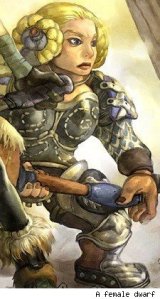
Concept art of a female Dwarf

As you can tell by the book I’ve written, I am a fan of the Dwarves. I’ve always been fascinated with them and enjoyed reading their stories in the sagas and in popular culture. But these guys and gals don’t always get the respect that they deserve. We’re not even going to go into the many times Loki cheated them out of their pay or messed with them while they were creating their masterpieces. Even skipping all of that, here are five times the Dwarves got the proverbial short-end of the stick.

The Beard Thing
While not Norse mythology,  I just felt we had to address this one. None other than JRR Tolkien himself served as the catalyst for this. In the notes to the Lord of the Rings he wrote that the Dwarf women looked just like the men. Some people interpreted this to mean that the women have beards just like the men. In the movie version of LOTR we have Aragorn out and out saying this. (Something he never did in the books.) Terry Pratchett took the ball and ran it even further in his Discworld novels with Dwarf females every bit as bearded as the men. I prefer to stick with the sagas. When the Dwarves construct the magical chain Gleipnir they make it from “six impossible things.” One of those things is “the beard of a woman.” So the sagas say it is impossible for women to have beards. With all due respect to Tolkien and Pratchett, I’m going with the saga’s version.

Toasted at Baldur’s Funeral
The gods were heartbroken over the death of Baldur, it shook them to the very core. Baldur’s widow, Nanna, was so upset that she died of a broken heart right there at the funeral. So we can imagine that Thor was not in the best of moods, either. But does that excuse this behavior?

 Thor then stood up and hallowed the pile with Mjolnir, and during the ceremony kicked a dwarf named Litur, who was running before his feet, into the fire.

We have no idea what Litur was doing there. Maybe he was running around when he was supposed to be quiet, but it still seems like a harsh reaction.

The Origin of the Dwarves
Although there are passing references to the dwarves being made of the blood and bones of a sea-giant, the main reference to the origin of the dwarves reads like this:

“Then the gods, seating themselves upon their thrones, distributed justice, and bethought them how the dwarves had been bred in the mould of the earth, just as worms are in a dead body. It was, in fact, in Ymir’s flesh that the dwarves were engendered, and began to move and live. At first they were only maggots, but by the will of the gods they at length partook both of human shape and understanding, although they always dwell in rocks and caverns.

The four corners of the world are each held up by a single dwarf. This is a powerful race renowned for being master-craftsmen, but we’re told they started out as maggots.

The Stoning of the Bridegroom
Poor Alvis, all the dwarf wanted was a beautiful bride and he had one, too. Unfortunately she was the daughter of Thor. The father of the bride didn’t want his daughter running off with this pale-nosed fellow. What is interesting here is that, instead of bashing him with Mjollnir, Thor says Alviss can marry his daughter if the dwarf can answer all of Thor’s questions about the world. We then get a long exchange between the two where Thor asks what the various races of the Nine Worlds call different things. For instance, we learn that the giants call the sun Ever-Bright, while the Elves call it Fair Wheel. This goes on through the night until finally the sun rises and turns Alvis into stone. Looking for love, he ended up looking like a statue.

Short-changed, Big-time
Dwarves are little people, right? The word has come down to us to mean someone of smaller stature. Well, the sagas say they were created “in man’s likeness.” You think that means they looked human – just smaller? Not quite. When Thor sees Alvis he says “What man is this?” Not what short creature, but what man. Check out this article on Wikipedia for more arguments on the subject. There are other references indicating that a dwarf is just like a man except he lives beneath the ground. Somewhere along the line the word dwarf was changed to mean shorter than normal and the entire race got tagged.

I hope you’re enjoying this series on Norse mythology. If there’s any subject you’d like to hear about, let me know and I’ll see what I can do. You can also check out the other entries in this series.

Five Magical Weapons from Norse Mythology

Loki’s Five Biggest Tricks

Five Magical Weapons from Norse Mythology

Viking swords, photo by Viciarg

Okay, we have another little trivia trip through the depths of Norse mythology. The Norse loved their weapons and it shows in their sagas. Lots of weapons are mentioned, they are often described as the “best of swords” or the “best of spears,” many of them even have names. But there are times when you need that little something extra. When fighting giants or dragons, any old ordinary weapon won’t do. No, what you need is a magical weapon and here are some of the best.

Freyr’s sword
We’ll start with Freyr’s sword which is  unique on this list in that it did NOT have a name. If it’s nameless, why bother? Because it is a weapon “which is so good that it fights of itself.” Yes, we have the world’s first automated weapons system and it comes from Norse mythology. Freyr later traded it away to win the hand of Gerðr, a beautiful giantess. It is thought by some that the sword is now in the hands of Surter, the fire demon and he will be wielding this weapon at the battle of Ragnarok. At which time Freyr is going to be regretting that trade.

The spear Gungnir
This was Odin’s own spear. It was created by the Dwarven mastersmiths – the sons of Ivaldi. Its main ability, and this was a hugely popular ability among Norse magic weapons, was that it hit whatever you threw it at. It didn’t matter how strong or how skilled you were, whatever you threw Gungnir at, you hit.

The sword Gram
This weapon might remind you of the more widely known Excalibur since Odin drove the blade of the sword into the heart of a mighty oak tree and said that whoever could pull out the sword would be fated to win in battle.  Sigmund was the hero who accomplished this feat and he went on to use the sword to great effect. Until the day that it shattered during a battle with a stranger wearing a wide-brimmed hat and a black, hooded cloak. (This would be a good place to mention that Odin frequently traveled the world and disguised himself by using a wide-brimmed hat and a black, hooded cloak. Just pointing that out.)  The sword was in pieces but the dying Sigmund asked his pregnant wife to gather up the pieces and have them reforged so that his son could have the sword when he was old enough. The son was Sigurd (sometimes called Siegfried) Once he had the sword reforged it was sharp enough to cut an iron anvil in two. Later Sigurd would use the sword to slay Fafnir the dragon. So this was a pretty powerful weapon.

The sword Tyrfing
Svafrlami, a king and a grandson of Odin, managed to capture two Dwarves aboveground. He decided the best thing to do was to have them create a magic sword for him. The sword would have a hilt made of gold, it would never miss, it would never rust and it would be sharp enough to cut metal as easily as cloth. But the Dwarves weren’t happy about being forced to work like that. So they cursed the blade. They made it so that someone would die every time the sword was drawn and they said the sword would be the source of three great evils.  Then, just to really prove their point, they cursed the blade so that it would cause the death of King Svafrlami. The sword cut a bloody path through several countries before the curse was finally broken.

The hammer Mjölnir
This was the magic hammer of Thor, the God of Thunder. The handle of this mighty weapon was a little bit shorter than planned, thanks to one of Loki’s tricks but that did nothing to reduce its power. What could this Dwarf-crafted masterpiece do? Its name means “crusher” and it could: “strike as firmly as he wanted, whatever his aim, and the hammer would never fail, and if he threw it at something, it would never miss and never fly so far from his hand that it would not find its way back, and when he wanted, it would be so small that it could be carried inside his tunic.” This was a hammer that would strike fear into the heart of giants and monsters alike. It also had accessories! Whenever Thor was getting ready to use his hammer he would put on his girdle of strength and his iron gloves. Then it was time to start crushing things.

Have I left out any weapons that you love? Tell us about them.


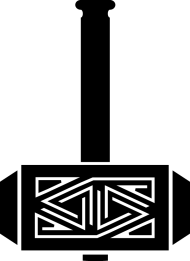
hammer stickerEdit: If you are a fan of Mjölnir, you might want to visit my Etsy shop. I have some vinyl decals on sale of my original knotwork design of Thor’s mighty hammer.


Or check out the other articles in my series:

Loki’s Five Biggest Tricks

Loki’s Top 5 Biggest Tricks

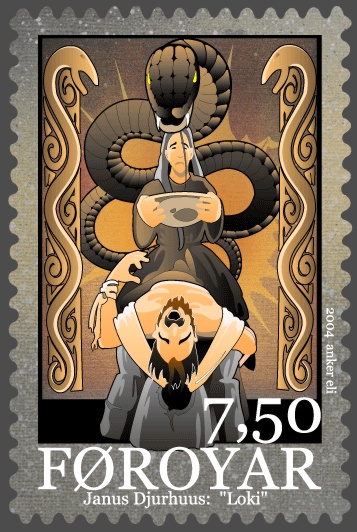
Loki stamp by Anker Eli Petersen

In Norse Mythology Loki is called the Trickster God but what exactly did Loki do to earn that title? Here, in ascending order of impact, are some of his biggest tricks. We won’t call them his best tricks because some of them were more than a little mean.

5. Ruining the feast
One day the sea god Aegir gave a feast. His two servants, Fimafeng and Eldir, welcomed all of the guests. making sure that they heaped tons of praise on every one of them. This annoyed Loki, so he killed Fimafeng. The gods were angry and drove him away. Loki comes back after a bit and brings up an oath he swore with Odin that they would drink together. The gods are forced to let him back in. Loki is grateful and contrite. No, he’s not! He proceeds to start trash-talking almost everyone else at the feast, calling them cowards, whores, unmanly, and everything else he can think of. Loki even goes so far as to insult Odin. The thing that finally gets him to shut up and leave is the sudden appearance of Thor who threatens to knock Loki’s head clean off his shoulders.

4. Loki cuts off Sif’s hair.
One day Loki was walking along when he happened to spy the goddess Sif lying asleep on the ground. Seeing this as the perfect opportunity to make some mischief, he cut off all of her hair. We’re never told any more of his motivation, that’s just apparently the way Loki works. Of course, he was caught. Sif is the wife of Thor, so you can imagine the Thunder god was not happy when he found out what happened. Once again Loki is about to be killed and swears an oath to make everything right. He eventually had the Dwarves make new magical hair for Sif, forged from a piece of gold.

3. Loki transforms himself into a female horse.
A builder was promised the sun, the moon and the goddess Freyja if he could build the walls of Asgard within a specific period of time. With the help of his magic stallion, the builder was dangerously close to completing this job. Loki transformed himself into a beautiful female horse and lured the stallion away. Without the horse’s help the man realized the only way to complete the job was by assuming his true identity – that of a mountain giant. Unfortunately, giants and Thor do not mix. The Thunder God used his hammer to smash in the giant’s skull. As a bonus, Loki then gave birth to Sleipnir, the eight-legged horse.

2. Messing with Mjolnir
This is a bit of a double-whammy since Loki pulled this trick in the process of making up for #4. Loki had the Dwarves create magical hair out of gold to replace the hair he had cut off of Sif’s head. While he was there he had them make some gifts for the other gods as well, including Odin’s spear Gungnir which always hits its target. Then, because he is the Trickster God, he brings these magical items to a different set of Dwarves. He bets them that they can’t make anything better. He is so sure of this that he bets his own head. These Dwarves are working on some wonderful things. Loki starts to worry and turns himself into a fly. He starts biting the Dwarf on the arm to distract him. The first item comes out of the forge and it is fine. While the Dwarf works on the second item fly-Loki bites him on the neck twice as hard. The Dwarf soldiers on and the second item is fine. While working on the third item fly-Loki bites the Dwarf on the eyelid drawing blood and making the Dwarf stop working for a minute. As a result of this the third item, Mjolnir, has a short handle and can only be used with one hand.

1. The death of Baldur
Baldur the Good was having terrible dreams that his life was in danger. His mother Frigga, being a goddess, “exacted an oath from fire and water, from iron, and all other metals, as well as from stones, earths, diseases, beasts, birds, poisons, and creeping things, that none of them would do any harm to Baldur.” Pretty impressive achievement, huh? Loki thought so and it made him mad. He put on a disguise and went to Frigga. There he learned that she had not extracted an oath from Mistletoe, thinking it was too young and feeble to harm her son. Loki runs off and makes a dart out of Mistletoe. He gives the dart to Baldur’s brother Hodur. Since Hodur is blind, Loki is even helpful enough to point him in the right direction. Hodur throws the dart, striking and killing Baldur.

What do you think? Did Loki earn the title of Trickster? Have I left out any tricks that you love? Chime in and let me know.