Loki’s Wives

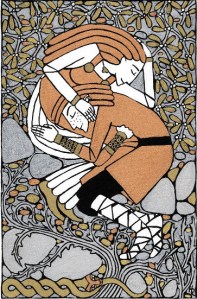
Amazing artwork by Hellanim on DeviantArt

I know that the Thor and Avengers movies, aided by the undeniable charm of Tom Hiddleston, have driven the popularity of Loki to gigantic heights.  I hope I’m not breaking any hearts, however,  when I tell you that Loki is married and had been married more than once. How many wives did Loki have? That gets a little tricky.

His latest wife and the one that stood beside him during his punishment is Sigyn. The Eddas list her as one of the Aesir, specifically calling her Asenjyur which is the goddess form of the Aesir. (The simplest way I have heard of describing the difference between the two groups of Norse gods is that the Aesir tended towards the power/war side of the spectrum and the Vanir tended towards the nature/fertility side.) The sagas also tell us that she is married to Loki. The language is quite clear “Sigyn, Loki’s wife…”She is the faithful wife who catches the poison that drips down from a serpent before the venom can harm her husband. Unfortunately, when the bowl she is using to catch the venom is full she must step away to empty it and Loki suffers incredible torment during those times. This story was fairly widespread and the skaldic poem Haustlong even uses “the burden of Sigyn’s arms” as a kenning for Loki.

Now it gets a little murkier. We know that Loki had three children with Angrboda but she is NOT mentioned as his wife in any references I could find. It is possible they were married at an earlier time period – marriage was not a “til death do us part” thing for the Norse but they also could have just been fooling around with each other. Like the gods of Greece and Rome, the Norse gods had some very human characteristics and were not always the most faithful of mates. Until I see some good research indicating otherwise I am going to operate under the assumption that they were fooling around.

H.A. Guerber made it even more confusing when he wrote “Loki’s third marriage was with Sigyn, who proved a most loving and devoted wife.” The loving and devoted wife part is fine, the part that has me scratching my head is “third marriage.” Especially since Guerber never mentions who the first or second wife were. I even did a word search on Loki and wife and could find no mention of either earlier mate.

While I wish that we had a clearer picture of the women in Loki’s life, a part of me imagines the Trickster himself would be quite pleased at the confusing state of this subject matter.
The Dwarf King

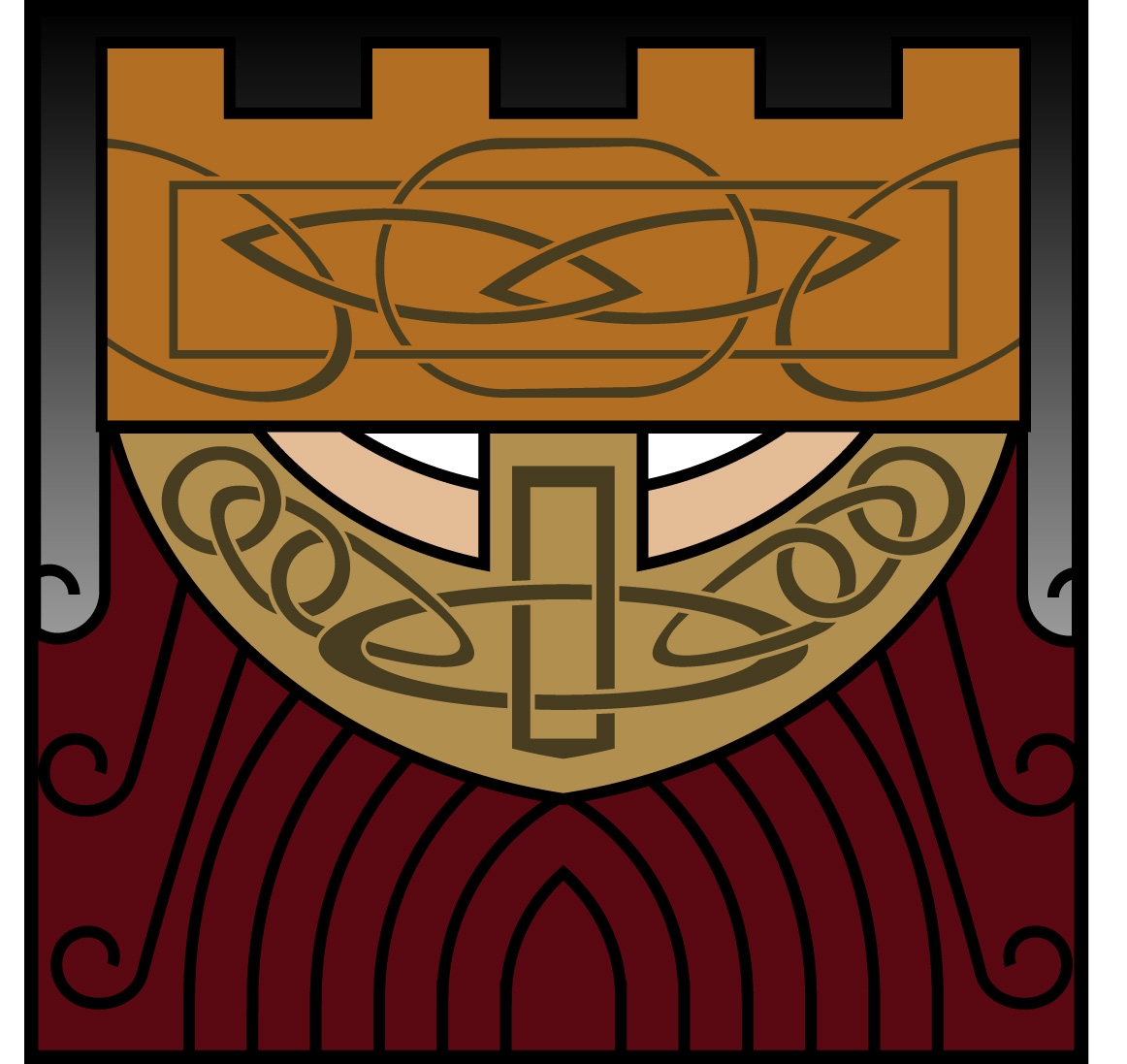
Dwarf_KingI have been playing around with some ideas for a project I have on the back burner. While I have produced a whole lot of artwork that I hate, I did manage to put this piece together. While I think it still has some weaknesses and needs a lot more work on the knots, it feels like I’m at long last heading in a good direction. What do you all think?

A Winter’s Tale of Ullr

It is 32 degrees F as I write this, not the coldest of winter mornings, but cold enough for a man like me who grew up in sunny Florida. So it seems appropriate that we turn our attention to the Norse god Ullr.

In the Poetic Edda we read that his home is called Ydalir which has been translated to mean “yew dales.” Given that Ullr was extremely fond of hunting and archery, we shouldn’t be surprised that he made his home in a place where yew trees thrives since that wood is especially prized for making bows. There are two other mentions of him, but they are almost throwaway lines that don’t really tell us anything about him. However, the more intriguing one at least mentions oaths sworn “by Ullr’s ring.”

Gylfaginning, in the Prose Edda, is where we can learn more about this god. During a conversation between Gangleri and Hárr, the former asks for the names of the various Aesir and which one you should call on for various boons. Hárr replies:

One is called Ullr, son of Sif, step-son of Thor; he is so excellent a bowman, and so swift on snowshoes, that none may contend with him. He is also fair of aspect and has the accomplishments of a warrior; it is well to call on him in single-combats.

If he is the go-to god for blessings in single combat we have to assume that he was no slouch with a sword and a spear but he is most commonly depicted with his beloved bow and arrows. The figure on the Böksta Runestone of a man on skis holding a bow is generally believed to be Ullr. The coat of arms for the municipality of Ullensaker in Norway, which derives its names from Ullr, features a man with bow and arrows.

I am not sure when or why the transition from snowshoes to skies occurred, but the god has been embraced whole-heartedly by many modern skiers. Breckenridge, CO has been hosting an Ullrfest for 50 years now. In addition many European skiers will carry an Ullr medallion to bring them good luck and safe times on the slopes.

Rán, the Sea Goddess

The Norse sea goddess Rán has been portrayed as a cruel woman, filled with a greedy desire to drag ships full of men down to the bottom of the ocean so that she may steal their lives and their treasure. She, along with her brother/husband Ægir, are sometimes identified as being neither Aesir nor Vanir, but older beings than the actual gods.

In Fridthjof’s Saga the hero is caught in a storm and mourns the idea the he must soon lay himself to rest on “Rán’s bed.” This saga also has the following passage:

“Gold is good to carry  / When you go a-wooing,
Empty-handed no one  / Comes to sea-blue Ran.
Cold is she to kisses,  / Flee’th from embraces,
But the sea-bride yieldeth / Met with shining gold.”

This ties in with the idea of Rán’s greed, for the men of old would make sure to always carry at least some small bit of gold with them when they were in dangerous waters. This gold would be used to win the favor of the sea goddess should the sailors meet a watery doom.

It seems odd that a society that has such strong ties with the sea would view it in such a negative light. It is not as if the Vikings were afraid of the open waters. They would sail out of sight of the land (something the ancient Greeks would never do) and the Vikings sailed far and wide. They went to sea in ships that were amazingly well-adapted to traveling both on the ocean and inland waters but they also undoubtedly had a healthy respect for the dangers one could encounter when traveling Rán’s road.

I think the key point to remember is that death by drowning was not considered a noble thing, it would not earn you a seat in Valhalla but a place in the undersea hall of Rán.

Who To Trust

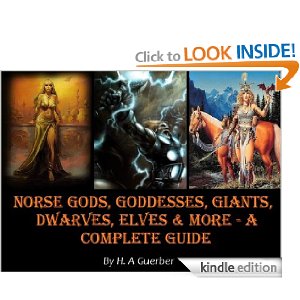
norsegodsbookI’ve been reading Norse Gods, Goddesses, Giants, Dwarves, Elves & More – A Complete Guide by H.A. Guerber. It is a hefty book published way back in 1909 that really tries to live up to the subtitle’s claim of being “complete.” (I give it bonus points for being edited by A. Thor.) In addition to the many stories it also gathers together over 60 illustrations. I have the Kindle version which claims to have been “revamped” in 2011.

While I do recommend this book for any fans of Norse mythology, I have to deliver that recommendation with a very big caveat – I am not sure that I can trust all of the stories in this book. This isn’t a scholarly book – it has no index and there are numerous mentions of “various sources” without any naming of those sources.

Don’t get me wrong, the book is an enjoyable read. It presents its information in a clear straightforward style that is entertaining. I have read some other reviews where people complained that it had too many poetry excerpts. I can understand that is just a byproduct of the time when the book was written. My quibble with the poetry has more to do with the author using both quotes from the Eddas and later sources such as Longfellow and Wagner. The similar presentation subtly implies that all the poetry has equal merit in depicting Norse myths. But while I have a certain level of respect for Longfellow and Wagner and the work they have done in helping to popularize the Norse myths, I don’t look to them as experts in the field.

Yet this brings up another issue – how accurate was Snorri? Nancy Marie Brown has a fascinating series of blog posts titled Seven Norse Myths We  Wouldn’t Have Without Snorri. In those posts she lays out her arguments for why she thinks Snorri didn’t just transcribe Norse legends, but made some of them up on his own. She makes some good arguments and the series is worth a read.

The whole issue of what the ancient Norse really believed is such a thorny one. We don’t have the written records for them like we do for the ancient Egyptians, Greeks and Romans. So we may never know definitive answers. And that is what can be so frustrating about this field and ultimately about Guerber’s book. I kept reading little bits and pieces of information and thinking “that’s so cool, I haven’t read that before.” But without some explanation about where exactly that nugget of information can from I am hesitant to use it. I’ve been burned by sources before – in my first book, Valda & the Valkyries,  I have Loki claiming to be a fire god because that is what so many sources used to say. I’m a bit gun-shy now. It could be a result of living in the interconnected world of the internet where all the information I could want is at my fingertips. Unfortunately it happens to be mixed in with all of the misinformation that I don’t want and there aren’t always clear signs telling me which is which.

Ultimately I can recommend Norse Gods, Goddesses, etc … as an entertaining read and a good overview, but I would hesitate to endorse it as 100% accurate.

Fast Facts About Alfheim

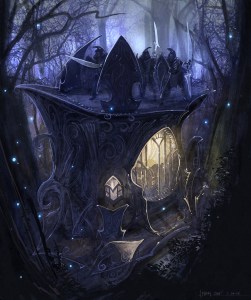
LotR_BfMe_II_Elf_siege_concept_art_1Some of the lands of Norse mythology are a bit harder to talk about than others simply because we are not told much about them. Today’s entry is one of those tough ones – Alfheim

What’s in a Name?
Alfheim means, simply, “Elf home.” In later English and Scots ballads it sometimes showed up as Elphame or Elfhame.

Who Owned It?
The Eddic poem Grinismal has one of the few mentions of the land of the Elves but all it tells us is “And Alfheim the gods | to Freyr once gave.” Freyr, or Frey, was given the land when he first arrived in Asgard as an infant and lived there afterwards.

Let There Be Light
Gylfaginning, doesn’t tell us much either. In talking about the many glorious place in heaven the poem simply says “That which is called Álfheimr is one, where dwell the peoples called Light-Elves.”

One of the Nine
Most scholars list Alfheim as one of the nine worlds of Norse cosmology. It is generally thought to be in the heavens like Asgard and Vanaheim.

Is That All You Got?
um… yes, unfortunately. I did find some references to the Kjalnesinga saga which relates the adventures of a human boy who journeyed to Alfheim and fell in love with a girl there but I haven’t be able to find the text in anything other than the original Icelandic. (I’d love to hear from anyone who knows of a good English translation of this saga.)

Fast Facts About the Jotun

Giants are often thought of as monsters. We have them serving the role of villain in folk tales and myths from around the world. The Norse myths are no exception with Thor, the defender of man, defeating numerous giants throughout his adventures. But if you think of the Jotun as nothing more than cardboard cutout bad guys then you’re making a big mistake.

The First Creatures
The first creature who was not a god was a giant. Ymir’s body arose out of the region where the cold of Niflheim met the fire of Muspelheim, although we are also told that Elivigar, the rivers that existed in Ginungagap, cast forth drops of venom and these formed the body of Ymir. Either way “all giants (come) from Ymir.”

It Does a Giant’s Body Good
If he was born before the world was formed, what exactly did Ymir survive on? Luckily for him, after the drops of vapor condensed to form his body they also produced a cow named Audhumla. Ymir survived on the milk that came from the cow.

They Were Useful
The sons of Bor (Vee, Vili and Odin) killed Ymir. We aren’t told the specific reason for them doing this although earlier in the saga it is mentioned that Frost-giants are inherently wicked. The three brothers then used Ymir’s blood to create the seas and all the waters, his flesh became the land, his bones became the mountains and his skull was used to form the sky.
A giant built the walls of Asgard. Granted, he was in disguise at the time, and he had the help of a magical horse that could pull tremendous loads of stone, and Thor killed him when his deception was uncovered, but he built the walls.

They Were Worthy Foes
During Balder’s funeral the gods can not move the laden funeral-ship because it is too heavy. The gods had to summon a giantess to move it for them so we know the giants could be stronger than the gods.
When Odin wanted to test the extent of his knowledge he traveled to see the giant Vafþrúðnir and entered into a battle of wits. Odin won, but only with the final question whereby he asked something that only he could know the answer to.
Giants were also behind the defeat of of Thor and Loki in the hall of Utgard-Loki. Loki lost an easting contest when his opponent ate not just the food but the plates and table the meal was set on. Thor lost both a drinking contest and a wrestling match. They were tricked and only discovered this when Utgard-Loki volunteered the information after they had left his hall.

 They Could Be Beautiful
Yes, the giantess Angrboda gave birth to the Midgard Serpent, the Fenrir Wolf, and Hela, so Jotun had the capacity to be monstrous with a capital “M.” But we also have several instances of gods falling in love with giants. The most notable one is probably Frey who fell head over heels in love with the giantess Gerd and eventually married her. In addition to Loki (who fathered those three children with Angrboda) Thor and Odin also had their dalliances on the giant side of the street.

So the story of the Jotun, like many parts of Norse myth, is a lot more nuanced and varied than popular culture would lead you to believe. It’s definitely worth your time to do some further digging on your own.

Fast Facts About Nifllheim

misty-mountains-coldLast week I wrote about Muspellheim, the land of fire. This week we’ll be heading in the opposite direction, to Niflheim, the land of ice and mist. I started with these two since the Eddas tell us that they were the first two lands formed “many ages before the earth was made.” Let’s see what we can learn about the icy land of Niflheim.

What’s In A Name?
We have two parts to the name. Nifl has been translated as “dark” and “misty.” Heim means “home” or “land” depending on the source you’re checking. So Niflheim is the dark-land or the mist-home. If you do an internet search “Abode of Mists” seems to be the more popular interpretation. However, the index of my copy of the Eddas says it means “Nebulous-Home.” The takeaway from all of this is that Niflheim is a cold, dark, misty place – the opposite of Muspellheim’s bright, hot. dryness.

It Takes Two
Niflheim was one half of the equation that created the first being. When it’s icy cold encountered the raging heat of  Muspell, the two combined and created Ymir, the father of the race of Frost Giants.  Odin and his brother Ve and Villi would later kill Ymir and use the parts of his body to create the world.

A Helish Place
You can find various arguments stating either that Helheim, or simply Hel, is located inside of Niflheim or right next to it. Hel is listed as one of the Nine Worlds so I am more inclined to believe the latter. There are some instances that say just the gates to Hel are located inside of Niflheim so it is more likely to me that they are separate worlds and you must travel through Niflheim to get to Hel.

It Has Roots
One of them at least, for we are told that one of the three roots of the World Tree Yggdrasil stands over Niflheim. The root is constantly gnawed on by Nidhoggr, the great serpent or dragon who lives there.
Underneath this root we also find the spring called Hvergelmir (roaring cauldron) which, being a hot spring, must be the only source of warmth in this dismal land. Hvergelmir is also the source of twelve different rivers, one of which is Gjoll, the river nearest the gate to Hel.

Come back next week as we visit another of the Nine Worlds of Norse mythology.

Fast Facts About Muspellheim

lavaThe cosmology of Norse mythology begins with two opposites, two contrasting regions: Muspellheim in the south, a land of fire and light; and Niflheim in the north, a land of water and cold. This week we’re going to talk about the first one of them and learn what the Eddas tell us about the land of primordial fire.

Visitors Not Welcome
Muspell, we are told, is full of flame, so bright and hot that it is “too luminous and glowing to be entered by those who are not indigenous there.” In other words, if you don’t have a least of drop of fire-giant blood running through your veins, don’t bother coming because you won’t be able to stand the heat.

The Stars Above
The stars in the sky are errant sparks of flame and fire that drifted out of Muspell. The sons of  Borr – Odin, Vili and Vee-  took these sparks and set them in the heavens to cast light on the world.

Sparks of Evil
Surtur, guards the borders of Muspelheim. This fire-giant has a a flaming falchion, a sword that “outshines the sun.” At the end of the world he will lead the sons of Muspelheim to defeat the gods. Surtur’s most notable victim is the god Frey, who will come to regret giving away the magic sword that was able to fight by itself. After the battle Surtur’s flames will “consume the universe with fire.”

Bridge-breakers
The sons of Muspell will shatter Bifrost, the rainbow bridge, when they ride across it. We are told that Bifrost is a most wonderful bridge and well constructed, but nothing in nature can withstand the destructive power of the fire-giants riding out to the final battle.

Next week we’ll look into the other half of this equation with some fast facts about Niflheim. See you then!


Fast Facts about Bifrost

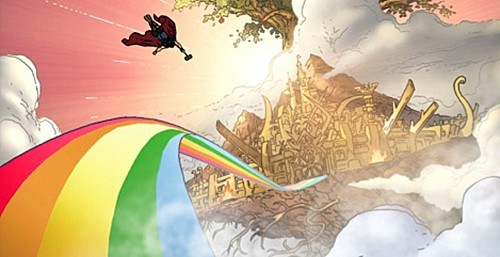
Bifrost as shown in an issue of Thor from Marvel Comics

Bifrost is the most famous bridge in Norse mythology, it was built to connect heaven and earth, but as Har tells Gangler in the Eddas: “You may know it as the rainbow.” What else do we know about this magical bridge? Read on.

The Colors of the Rainbow – All Three
How many colors are in a rainbow? In real life, it depends on many different factors, such as the angle of the sun, exit angle of the refracted light, etc… (Check out this article from Wikipedia for the technical lowdown.) Har makes it simpler for us by saying “It is of three hues…” I wish he would have told us all three colors, but he didn’t. A later passage does reveal one of the colors which we’ll get to in a moment.

It Will Be Broken
Although Bifrost is “constructed with more art(skill) than any other work” it is going to break one day. The day that the sons of Muspell ride across the bridge to attack Asgard Bifrost will crumble to pieces beneath them. This isn’t any fault of the gods who built it since we are told nothing in Nature can resist the sons of Muspell when they ride forth.

It’s On Fire
The red that we see in Bifrost comes from a fire that burns over it.  The fire burns to keep the Frost Giants and Mountain Giants from invading Asgard. We are told the ginats would be eager to raid the many fine halls in Asgard if they could just walk right up the bridge.

Thor Isn’t Allowed
The gods ride across Bifrost (also called the Aesir Bridge) every day to their council at the foot of Yggdrasil. The Eddas say that Thor can not ride over the bridge but has to walk and wade through four separate rivers instead. Supposedly his thunder chariot would damage the bridge, setting it all in flames and turning the boiling water beneath Bifrost boiling hot.

It’s Guardian Can Hear the Grass Grow
Heimdall is in charge of guarding Bifrost and he has a number of skills to help him out with his task. His senses are so acute that he can hear the grass grow on the earth and the wool grow on a sheep’s back. He can see, day or night, for a hundred miles around him. To top it all off, he needs less sleep than a bird.

That’s it for this week. See you next time!

Posted by Mark Neumayer