Warrior Women in the Viking World

IF
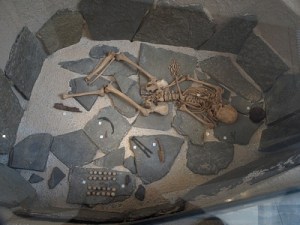
Viking grave photo courtesy of Dark Ages Re-Creation Company

This interesting article from Tor.com talks about how some of the bodies found in Viking graves with weapons are actually women. It seems that even though the sagas speak of women fighting alongside the men, many archaeologists would just assume that if there was a weapon in the grave then the person buried there had to be a man. Pretty lame move in my opinion.

Ignore the subhead of the article. The study they reference claims half of the “settlers” were female, not half of the “warriors” found in graves but why expect a journalist to let truth stand in the way of a good headline? (Is my bias against lazy writers who don’t bother to read the entire article they are lifting quotes from showing?)

Anyway, I highly recommend reading the comments, there are some thoughtful additions and a few links to further reading.

Vikings on Pinterest

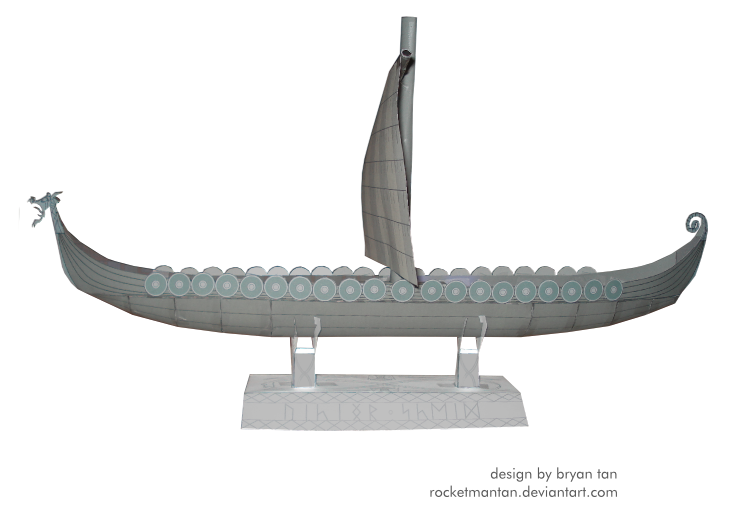
Viking longship by Flickr user Jomme

I don’t know how many of you are familiar with Pinterest. It is a social networking site that focuses on sharing cool images with other users. When you find an image or article that you like you can pin it – kind of like making a bookmark for it. The nice thing about Pinterest is you can then organize boards that collect together your pins based around a particular theme. Other people can then follow those boards and see what you’re up to.

As you can probably guess, I follow a lot of boards that feature Viking themes and Valkyrie artwork. There are some really stunning images out there that I would not have run across if I wasn’t on Pinterest. (Like the awesome picture I’m using for this post.)

My own boards feature my artwork or neat images I’ve found. I also like to start a board for whatever book project I am involved in (or just thinking about.) I pin stuff that I find inspirational or might want to use for reference at a later date.

Here are a few boards that I think you should check out:

Modern Viking Crafts – modern day interpretations of traditional Viking work

Norse – a nice mix of new and old Viking-related items from tools to posters and funny images

Viking – Anglo-Saxons – lots of great illustrations and really good photos of people in authentic dress from these two ancient cultures

Go on and check them out. If you have any favorite boards, show them some love by posting a link in the comments.

Viking: The Norse Warrior’s [Unofficial] Manual – Review

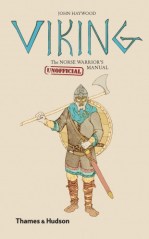
VikingManualI recently finished reading John Haywood’s Viking: The Norse Warrior’s [Unofficial] Manual and highly recommend it. The author covers basic details such as why a Norseman would choose to be a Viking in the first place, the various social levels in Viking times, weapons and tactics and the various types of Viking ships.

I like the way Haywood packs in a lot of historical information about life as a Viking and manages to do this without ever being stuffy. The whole book is written in a friendly tone that comes across more as a talk between friends than a lecture or lesson. There is a nice sections that breaks down the different countries of the world and describes them in terms of how hard it was to raid them and what kind of spoils you could expect to plunder there.

There are a good number of period illustrations scattered throughout the text along with some color photos of a modern combat reenactment group demonstrating some fighting techniques. While the book delivers a ton of information it also lists sources for further reading. John Haywood definitely has the pedigree to write an authoritative book on this time period. With Viking: The Norse Warrior’s [Unofficial] Manual he has written abook that is also entertaining.

Viking Miniatures

I have a great love for miniature soldiers despite the fact that I can’t paint them that well and I don’t own that many. I was going to write a post about some of the various companies that produce Norse-themed miniatures but once again my research revealed someone who had done a better job of it than I ever could. Go to this page and read White Knight’s exhaustive listing of Viking figures from all the different companies that make them. It is a really thorough write-up that includes a lot of pictures and gives all sorts of details about the minis. Some of the links are dated. They do bring you to the company’s website, you just have to search for the specific figs yourself.

By the way, when I am writing I like to have inspirational artwork for my computer desktop. I used an image of this Dwarf female from Reaper Miniatures  as part of the mix while writing Valda and the Valkyries.

Rán, the Sea Goddess

The Norse sea goddess Rán has been portrayed as a cruel woman, filled with a greedy desire to drag ships full of men down to the bottom of the ocean so that she may steal their lives and their treasure. She, along with her brother/husband Ægir, are sometimes identified as being neither Aesir nor Vanir, but older beings than the actual gods.

In Fridthjof’s Saga the hero is caught in a storm and mourns the idea the he must soon lay himself to rest on “Rán’s bed.” This saga also has the following passage:

“Gold is good to carry  / When you go a-wooing,
Empty-handed no one  / Comes to sea-blue Ran.
Cold is she to kisses,  / Flee’th from embraces,
But the sea-bride yieldeth / Met with shining gold.”

This ties in with the idea of Rán’s greed, for the men of old would make sure to always carry at least some small bit of gold with them when they were in dangerous waters. This gold would be used to win the favor of the sea goddess should the sailors meet a watery doom.

It seems odd that a society that has such strong ties with the sea would view it in such a negative light. It is not as if the Vikings were afraid of the open waters. They would sail out of sight of the land (something the ancient Greeks would never do) and the Vikings sailed far and wide. They went to sea in ships that were amazingly well-adapted to traveling both on the ocean and inland waters but they also undoubtedly had a healthy respect for the dangers one could encounter when traveling Rán’s road.

I think the key point to remember is that death by drowning was not considered a noble thing, it would not earn you a seat in Valhalla but a place in the undersea hall of Rán.

Proof the Gods Want Us To Be Happy

I would guess that not many stories on Norse mythology start by quoting Benjamin Franklin, but you probably understand by now that I come at the subject from a different angle than most people. The quote is often heard or read as:

Beer is proof that God loves us and wants us to be happy.

As with most quotes on the internet, it is not exactly right. Mr. Franklin was actually talking about wine. I think the ancient Vikings would have agreed mightily with that statement in either form. Odin enjoyed his wine. In The Lay of Grimnir we are told that Odin gives his nightly share of the meat from the boar Sæhrimnir to his wolves Geri and Freki and that “on wine only… Odin ever lives.” The Younger Eddas say it again, telling us “wine is for him both meat and drink.” So wine was valued highly. But it seems to be more of a special item. The common conception is that the average Viking drank mead, right?

I was thinking about the many stories of the Einherjar, the honored warriors plucked from the fields of battle who fight all day and feast all night in Valhalla. The Valkyries serve them each night. We even have one of the kennings for Valkyrie being cup-bearer. I have to admit that I had always thought of them as drinking mead. After all we get a description of the goat Heidrûn that stands on the roof of Odin’s hall and produces an endless supply of golden mead. So they had plenty of the stuff. Do a word search for “mead” in the Eddas and you will find it mentioned 34 times. That is a pretty impressive showing.

Except The Lay of Vafthrudnir tells us that the Einherjar “beer with the Æsir drink…” They’re drinking beer, not mead. Later in the same lay we read a list of the names of the Valkyries who “bear beer to the Einherjar.” If we do another word search for “beer” we find this beverage mentioned 35 times, just barely edging out mead. The Lay of the Dwarf Alvis has Odin challenging the Dwarf to provide the different names for beer. He answers:

Ol it is called by men, but by the Æsir biorr, the Vanir call it veig, hreina logr the Jotuns, but in Hel ’tis called miodr: Suttung’s sons call it sumbl.

I hadn’t thought of the Vikings as beer drinkers. After some consideration I think it is because popular culture is filled with so many references to Vikings quaffing their horns of mead. (It seems you have to quaff mead, for whatever reason. There aren’t many references to them sipping it.) We can blame artistic license for that. It certainly seems more exotic for a fantasy-type Viking hero to be drinking mead, which is a fairly uncommon drink, than to have them drinking a plain old beer.

I got to wondering what their beer was like. A quick search lead me to the following article from the Guardian “How to make Viking heather beer.” The article claims this is much like what the Vikings would have drank, although there are probably those who would argue whether this is proper beer or ale or honey-wine or metheglin. I will leave that argument to them. If you’re looking for a recipe that is more for the hard-core homebrewer, I would suggest this one. That recipe also goes into a bit of detail about the history of brewing this sahti type beer, a style which is still made today in Finland.

When it comes to beer I have a quality over quantity approach. I’d rather drink a single bottle of some great stuff than two or three average beers. The Eddas have a number of places where they agree with my limited approach to drinking. The High Father’s Lay warns us that “too much beer-bibbing” is bad because it leads us to a loss of control of our mind. Remember, the Vikings valued wisdom. There are various other references to not indulging in too much drinking because you don’t think straight when you drink too much. Good advice.
Viking Smarts

https://i0.wp.com/upload.wikimedia.org/wikipedia/commons/thumb/7/7f/Odin_og_V%C3%B6lven_by_Fr%C3%B8lich.jpg/320px-Odin_og_V%C3%B6lven_by_Fr%C3%B8lich.jpg
Odin og Völven by Frølich

Viking society was not a literary society – they did not write things down to remember them. Instead the skalds, or poets, committed all of the stories and sagas to memory, passing them along orally from generation to generation. Lack of book-learning does NOT mean that the Vikings were not intelligent people. Yes, they were fierce warriors, but they also valued wisdom. Today I’ll be discussing some of the ways the sagas show that to be true.

The Big O
Let’s start out by talking about Odin. He is chief of the Aesir, ruler of the Norse gods. The gods are assigned areas that they oversee or control. For example, Thor is god of thunder and lightning. He rules the storms. So what area does Odin rule? Which attributes did the Vikings assign to their chief god? War, yes, but also wisdom. He doesn’t just oversee it in some aloof way, either. Odin actively travels the Nine Worlds seeking wisdom and knowledge. The sagas have many stories about his journeys. He often travels in different disguises, but all of the disguises share one common attribute – they only have one eye. Which leads us to…

Knowledge is Valued
We know that the Norse valued knowledge because their chief god was willing to sacrifice one of his own eyes for more knowledge. The Well of Mimir granted great knowledge to those who drank from it, but before he was allowed to drink Odin had to pay the price. He willingly sacrificed one of his eyes in exchange for a drink.
Odin also put the rest of his body through the wringer for the sake of learning. He once pierced himself with his own spear, hanging his body from a tree for nine days so that he could gain knowledge of the runes.

Flyting & Kennings
Flyting is basically a sort of insult contest conducted in verse. Kennings are poetic expressions that stand in for another word. (You would refer to the ocean as the whale-road, for example.) Some of you might disagree with me, but I’d like to argue that both of these are signs of a society that obviously values knowledge.
It takes brains to come up with a rhyming insult. We’re not just talking about two dolts standing up and saying things like “No, you’re ugly.” The saga Lokasenna tells us about a flyting which involved Loki, the Trickster.  There he just didn’t take on another god. No, one by one he took on almost every single god in the hall. The fact that this story was passed down through the generations tells us how such displays of intellect had to have been valued.
As for kennings, there are simple ones such as calling Odin Frigg’s-mate, but there are many filled with an inspired creativity that, to me at least, are signs of a society that revels in knowledge. Kennings even became multi-layered. The mouth could be called the Ship of Words which would lead to the tongue being referred to as the Tiller of the Ship. The second kenning doesn’t have an obvious reference back to the first if it stands alone. Yet audiences were expected to pick up on these references as a matter of course. You don’t hold expectations like that of an uneducated people.

Final thoughts
There is a bit of a popular misconception that the Vikings were all battle-crazed warriors. A little reading and study shows that to be decidedly untrue. The evidence of what they valued, as shown by the things they thought important enough to preserve through poem and song, show they placed a great value on wisdom and intelligence. We could do worse than to remember what we are told in the Lay of Hamdir – “That man lacks much who wisdom lacks.”