Rán, the Sea Goddess

The Norse sea goddess Rán has been portrayed as a cruel woman, filled with a greedy desire to drag ships full of men down to the bottom of the ocean so that she may steal their lives and their treasure. She, along with her brother/husband Ægir, are sometimes identified as being neither Aesir nor Vanir, but older beings than the actual gods.

In Fridthjof’s Saga the hero is caught in a storm and mourns the idea the he must soon lay himself to rest on “Rán’s bed.” This saga also has the following passage:

“Gold is good to carry  / When you go a-wooing,
Empty-handed no one  / Comes to sea-blue Ran.
Cold is she to kisses,  / Flee’th from embraces,
But the sea-bride yieldeth / Met with shining gold.”

This ties in with the idea of Rán’s greed, for the men of old would make sure to always carry at least some small bit of gold with them when they were in dangerous waters. This gold would be used to win the favor of the sea goddess should the sailors meet a watery doom.

It seems odd that a society that has such strong ties with the sea would view it in such a negative light. It is not as if the Vikings were afraid of the open waters. They would sail out of sight of the land (something the ancient Greeks would never do) and the Vikings sailed far and wide. They went to sea in ships that were amazingly well-adapted to traveling both on the ocean and inland waters but they also undoubtedly had a healthy respect for the dangers one could encounter when traveling Rán’s road.

I think the key point to remember is that death by drowning was not considered a noble thing, it would not earn you a seat in Valhalla but a place in the undersea hall of Rán.
Who To Trust

norsegodsbookI’ve been reading Norse Gods, Goddesses, Giants, Dwarves, Elves & More – A Complete Guide by H.A. Guerber. It is a hefty book published way back in 1909 that really tries to live up to the subtitle’s claim of being “complete.” (I give it bonus points for being edited by A. Thor.) In addition to the many stories it also gathers together over 60 illustrations. I have the Kindle version which claims to have been “revamped” in 2011.

While I do recommend this book for any fans of Norse mythology, I have to deliver that recommendation with a very big caveat – I am not sure that I can trust all of the stories in this book. This isn’t a scholarly book – it has no index and there are numerous mentions of “various sources” without any naming of those sources.

Don’t get me wrong, the book is an enjoyable read. It presents its information in a clear straightforward style that is entertaining. I have read some other reviews where people complained that it had too many poetry excerpts. I can understand that is just a byproduct of the time when the book was written. My quibble with the poetry has more to do with the author using both quotes from the Eddas and later sources such as Longfellow and Wagner. The similar presentation subtly implies that all the poetry has equal merit in depicting Norse myths. But while I have a certain level of respect for Longfellow and Wagner and the work they have done in helping to popularize the Norse myths, I don’t look to them as experts in the field.

Yet this brings up another issue – how accurate was Snorri? Nancy Marie Brown has a fascinating series of blog posts titled Seven Norse Myths We  Wouldn’t Have Without Snorri. In those posts she lays out her arguments for why she thinks Snorri didn’t just transcribe Norse legends, but made some of them up on his own. She makes some good arguments and the series is worth a read.

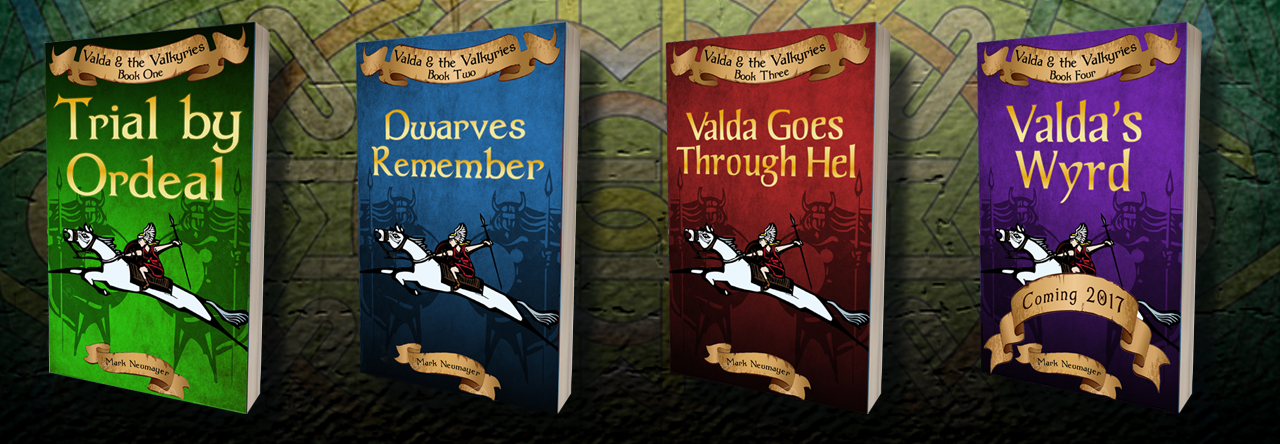
The whole issue of what the ancient Norse really believed is such a thorny one. We don’t have the written records for them like we do for the ancient Egyptians, Greeks and Romans. So we may never know definitive answers. And that is what can be so frustrating about this field and ultimately about Guerber’s book. I kept reading little bits and pieces of information and thinking “that’s so cool, I haven’t read that before.” But without some explanation about where exactly that nugget of information can from I am hesitant to use it. I’ve been burned by sources before – in my first book, Valda & the Valkyries,  I have Loki claiming to be a fire god because that is what so many sources used to say. I’m a bit gun-shy now. It could be a result of living in the interconnected world of the internet where all the information I could want is at my fingertips. Unfortunately it happens to be mixed in with all of the misinformation that I don’t want and there aren’t always clear signs telling me which is which.

Ultimately I can recommend Norse Gods, Goddesses, etc … as an entertaining read and a good overview, but I would hesitate to endorse it as 100% accurate.