Can any of you pass along some good references for Norse knot-work? I have a great book on drawing Celtic style knot-work but was wondering if there are any good instructional books for the Norse version. I suspect they might be more popular in the Scandinavian countries. My local librarian did help turn me on to THE INDUSTRIAL ARTS OF SCANDINAVIA in the Pagan Time by Hans Hildebrand. I’ve only leafed through it so far but it looks promising. However, I’d love to see more.
The cosmology of Norse mythology begins with two opposites, two contrasting regions: Muspellheim in the south, a land of fire and light; and Niflheim in the north, a land of water and cold. This week we’re going to talk about the first one of them and learn what the Eddas tell us about the land of primordial fire.
Visitors Not Welcome
Muspell, we are told, is full of flame, so bright and hot that it is “too luminous and glowing to be entered by those who are not indigenous there.” In other words, if you don’t have a least of drop of fire-giant blood running through your veins, don’t bother coming because you won’t be able to stand the heat.
The Stars Above
The stars in the sky are errant sparks of flame and fire that drifted out of Muspell. The sons of Borr – Odin, Vili and Vee- took these sparks and set them in the heavens to cast light on the world.
Sparks of Evil
Surtur, guards the borders of Muspelheim. This fire-giant has a a flaming falchion, a sword that “outshines the sun.” At the end of the world he will lead the sons of Muspelheim to defeat the gods. Surtur’s most notable victim is the god Frey, who will come to regret giving away the magic sword that was able to fight by itself. After the battle Surtur’s flames will “consume the universe with fire.”
Bridge-breakers
The sons of Muspell will shatter Bifrost, the rainbow bridge, when they ride across it. We are told that Bifrost is a most wonderful bridge and well constructed, but nothing in nature can withstand the destructive power of the fire-giants riding out to the final battle.
Next week we’ll look into the other half of this equation with some fast facts about Niflheim. See you then!
My posting rate slowed down during the holidays because I was working on a few things for friends and family (and working a ton of extra hours at one of my two jobs.) I couldn’t show you any of that stuff until everybody got their gifts, but I wanted to share a couple of things now.
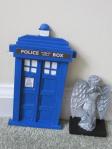
First of all, I am a big Doctor Who fan. So are my wife and one of my best friends John and his girlfriend Marge. So I made some miniature Tardises (Tardi?) that can be used as a fairy door or fridge magnet. They are about 7 inches tall and I made them mostly from bass wood. Standing next to the Tardis in the photo is the little something extra that I made for my wife – a Weeping Angel. This was made from a Polly Pocket doll I got at the store, with a hot glue gun for the details on the wings and the hair. I got the idea from this blog except they used a Barbie doll and I had to make allowances for the size difference. The Weeping Angels are in my favorite Doctor Who episode of all time – Blink. Yes, I know they appear again in a more recent episode, but that episode wasn’t nearly as good as the first one. Blink did not need a sequel.
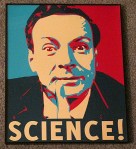
My friend Lyn has been a huge help with editing for my first book and she was foolish enough to come back for more with my second book, too. As a small token of my appreciation for the huge help she has given me I created this mini-poster and printed it out for her. It features Nobel-winning physicist Richard Feynman. He was immensely smart and funny and Lyn is a fan of his books so when I came up with the idea this was a no-brainer. Science! Yeah!
We also redecorated my son’s bathroom with an Angry Birds theme so I did a couple of paintings for in there. Then there was the custom superhero logo shirt I made for a nephew and some other odd stuff. A lot of things to make, but a lot of satisfaction for me in making people happy, so it was all definitely worth it.
My family and I went to a solstice service last week and I was still in a solstice kind of mood today. So I worked up a little knot-work snowflake while the paint was drying on a couple of projects.
The shopping is done! A little bit of crafting left and a little bit of wrapping after that, but I am basically ready for the holiday and some nice relaxing time with my wife and little boy. I hope everything is going well for all of you and the new year brings many good things to you all.
I spend most of my time writing now, but I worked as a graphic designer for a long while. Plus, I’ve always been a doodling type of guy. So when I had the chance to buy Christopher Hart’s Manga for the Beginner: Kawaii I jumped at it. Very cool book with some great tips for the artist wanting to draw in the super-cute Japanese style. (Hey, I like Mixed Martial Arts and kawaii manga – I’m complex.)
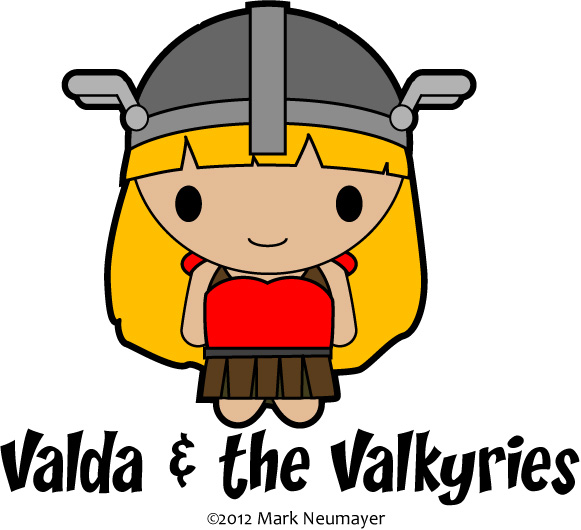
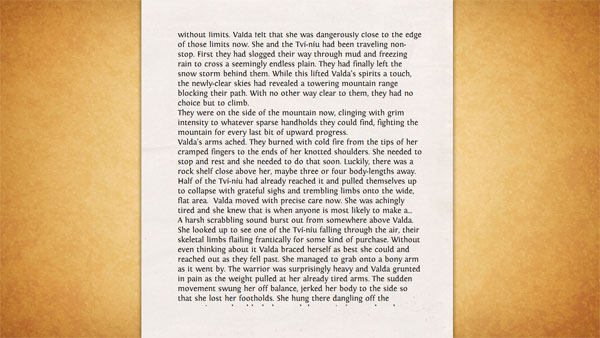
Here’s the first piece I drew after getting fired up from reading the book. I worked up a kawaii version of the main character from my book Valda & the Valkyries. Sketched by hand, then scanned and built in Adobe Illustrator. I’m happy with it but I think we need a version with Valda having those Viking-style braids.
As you can tell by the book I’ve written, I am a fan of the Dwarves. I’ve always been fascinated with them and enjoyed reading their stories in the sagas and in popular culture. But these guys and gals don’t always get the respect that they deserve. We’re not even going to go into the many times Loki cheated them out of their pay or messed with them while they were creating their masterpieces. Even skipping all of that, here are five times the Dwarves got the proverbial short-end of the stick.
The Beard Thing
While not Norse mythology, I just felt we had to address this one. None other than JRR Tolkien himself served as the catalyst for this. In the notes to the Lord of the Rings he wrote that the Dwarf women looked just like the men. Some people interpreted this to mean that the women have beards just like the men. In the movie version of LOTR we have Aragorn out and out saying this. (Something he never did in the books.) Terry Pratchett took the ball and ran it even further in his Discworld novels with Dwarf females every bit as bearded as the men. I prefer to stick with the sagas. When the Dwarves construct the magical chain Gleipnir they make it from “six impossible things.” One of those things is “the beard of a woman.” So the sagas say it is impossible for women to have beards. With all due respect to Tolkien and Pratchett, I’m going with the saga’s version.
Toasted at Baldur’s Funeral
The gods were heartbroken over the death of Baldur, it shook them to the very core. Baldur’s widow, Nanna, was so upset that she died of a broken heart right there at the funeral. So we can imagine that Thor was not in the best of moods, either. But does that excuse this behavior?
Thor then stood up and hallowed the pile with Mjolnir, and during the ceremony kicked a dwarf named Litur, who was running before his feet, into the fire.
We have no idea what Litur was doing there. Maybe he was running around when he was supposed to be quiet, but it still seems like a harsh reaction.
The Origin of the Dwarves
Although there are passing references to the dwarves being made of the blood and bones of a sea-giant, the main reference to the origin of the dwarves reads like this:
“Then the gods, seating themselves upon their thrones, distributed justice, and bethought them how the dwarves had been bred in the mould of the earth, just as worms are in a dead body. It was, in fact, in Ymir’s flesh that the dwarves were engendered, and began to move and live. At first they were only maggots, but by the will of the gods they at length partook both of human shape and understanding, although they always dwell in rocks and caverns.
The four corners of the world are each held up by a single dwarf. This is a powerful race renowned for being master-craftsmen, but we’re told they started out as maggots.
The Stoning of the Bridegroom
Poor Alvis, all the dwarf wanted was a beautiful bride and he had one, too. Unfortunately she was the daughter of Thor. The father of the bride didn’t want his daughter running off with this pale-nosed fellow. What is interesting here is that, instead of bashing him with Mjollnir, Thor says Alviss can marry his daughter if the dwarf can answer all of Thor’s questions about the world. We then get a long exchange between the two where Thor asks what the various races of the Nine Worlds call different things. For instance, we learn that the giants call the sun Ever-Bright, while the Elves call it Fair Wheel. This goes on through the night until finally the sun rises and turns Alvis into stone. Looking for love, he ended up looking like a statue.
Short-changed, Big-time
Dwarves are little people, right? The word has come down to us to mean someone of smaller stature. Well, the sagas say they were created “in man’s likeness.” You think that means they looked human – just smaller? Not quite. When Thor sees Alvis he says “What man is this?” Not what short creature, but what man. Check out this article on Wikipedia for more arguments on the subject. There are other references indicating that a dwarf is just like a man except he lives beneath the ground. Somewhere along the line the word dwarf was changed to mean shorter than normal and the entire race got tagged.
I hope you’re enjoying this series on Norse mythology. If there’s any subject you’d like to hear about, let me know and I’ll see what I can do. You can also check out the other entries in this series.
Writing a little about the nuts and bolts of what works for me. Not trying to set this out as the way things should be, just offering up what works for me in case it can help someone else.
I use a program called FocusWriter for creating the original text in my books. It is one of those minimalist programs that blanks out the screen and doesn’t allow you to do anything else but write. I will admit that I need something like that. There are just too many distractions and too many other things that a computer can do. Think of minimalist word processors as the equivalent of blinders for a horse – something to help you get to where you want to go.
FocusWriter doesn’t have a lot of the bells and whistles of something like MS Word or OpenOffice but you don’t need that when you’re in the initial creation stages. Just write the words! I can style things as much as I need to at this point. FW lets you set up themes (You can see the one I’ve created in the attached image.) that help put you in a nice frame of mind for writing. It’s everything you need from the software.
Yeah, it is nice to be able to tab over to an Internet browser when you have a question about something. I use the net for ideas for names especially. But it also breaks the flow of writing. Writing isn’t always easy for me and when I get into the zone I want to stay there, not go traipsing off somewhere else. So I use a trick I learned about from Cory Doctorow – when I come across a name or a fact I need or something else that I am just not sure about I type XXXX into the manuscript. It is a nice visual cue when I read back over the previous day’s writing. Plus I can use the Find function to sort through the different instances of XXXX to make sure I didn’t miss any of them. Very useful!
I’ve worked a lot as an artist over the years and worked on a number of different computers. Currently I have two PCs. I do early morning writing on the downstairs computer. Once the wife and son wake up I use the upstairs computer for afternoon/evening writing. I’m digging the upstairs computer lately. It is the older one which means it is slower for surfing the net and playing games so those distractions are less tempting. But I also like it because of the setup. We’re using it as something of a media center in the bedroom so it sits on top of a dresser. So I have started to use it as a standing desk. I’d read a lot about the health benefits of standing desks and wanted to give one a try. I do like it a lot. There was no discomfort for me – I don’t usually write for more than two or three hours at a time. I also like being able to pace. I’ve always found movement to be a good stimulus to thoughts. Being able to type a bit, walk back and forth while the next part germinates and then type some more is really refreshing. Give it a try.
Spent some very enjoyable time at the local comics convention yesterday with my lovely wife and our young boy. It’s a big show but it was a very nice crowd. We only found out about it on Thursday so we just had Friday to get together some appropriately geeky stuff to wear. I made a couple quick t-shirts for myself and the wife (Avengers for her, Ultraman for me) and worked up a little Thor costume for Taliesin. It was his first con and he had a great time asking all the other cosplayers to pose for a picture with him. (I mentioned how nice the crowd was, right?)
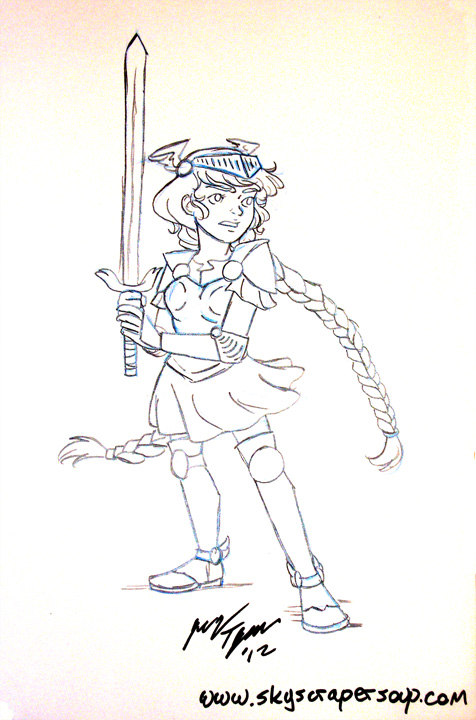
I met Kerry Lyn Thompson in Artist Alley and had her do a quick sketch of the main character from Valda and the Valkyries. It was nice to meet her and I am really happy with the artwork. I think I’m going to have to make it a habit to have different artists do a sketch of our Dwarven Valkyrie.
You know, I understand that Smashwords has to set limits on what sort of files they can and can not accept. I get it. But man is it frustrating to go through their Meatgrinder app and end up with something that doesn’t look as good as what I can create myself.
The technology is there but the integration isn’t… yet. I won’t let myself get too worked up over it because we are still in the young days of the digital revolution. It is not unusual for us to be hitting rough spots along the way.
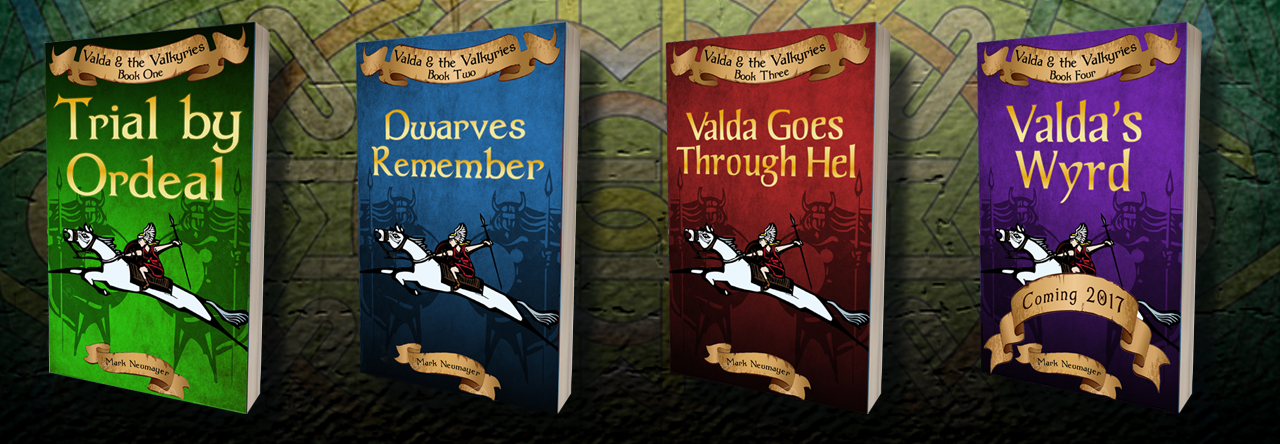
Won’t it be nice when this is behind us? I mean, I have all sorts of ideas for taking advantage of the e-format for books, of trying new things that simply can’t be done with a paper book. I tried to push things a bit by incorporating endnotes into Valda & the Valkyries. I went kind of meta with them, explaining some of the thought processes I went through in writing the book. It is not something I would recommend people check out on their first read through – it would break the flow of the narrative too much, it would smash the heck out of the “fourth wall.” But hyperlinks do give us an interesting way to add what is essentially a “author’s commentary” track to books. I’m excited to see if others start doing this, too, or coming up with even wilder things.
We lost a really inspiring author this week when Ray passed on. It wasn’t just his fiction that got me fired up – he had great advice on the creative life as can be seen in the excellent Zen in the Art of Writing. Well worth reading and reading again. I gave my copy to one of my writing friends just a few months ago. Not because I had gotten everything I could out of the book – I’m going to have to get another copy of it soon.
 Can any of you pass along some good references for Norse knot-work? I have a great book on drawing Celtic style knot-work but was wondering if there are any good instructional books for the Norse version. I suspect they might be more popular in the Scandinavian countries. My local librarian did help turn me on to THE INDUSTRIAL ARTS OF SCANDINAVIA in the Pagan Time by Hans Hildebrand. I’ve only leafed through it so far but it looks promising. However, I’d love to see more.